Good Time: The Modern Sans Serif for Your Next Design Project
A Clean Slate for Modern Communication
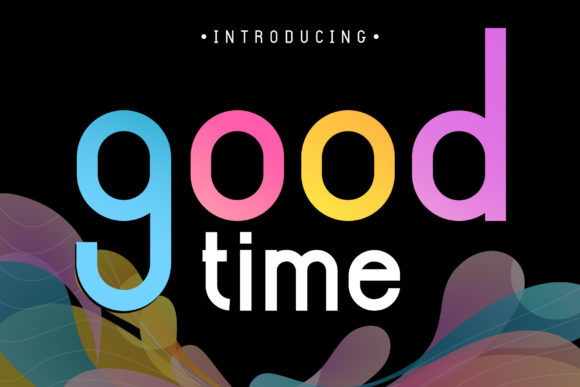
When you're building something new—a brand, a website, a poster series, a YouTube channel—you need typography that works as hard as you do. Good Time is a simple, modern, yet stylish sans serif font designed to meet exactly that need. It doesn't try to be the loudest voice in the room. Instead, it offers clarity, versatility, and a quiet confidence that lets your content take center stage.
What makes Good Time stand out isn't ornamentation or novelty. It's the balance. The letterforms are clean and geometric without feeling cold or mechanical. There's a warmth built into the curves and spacing that gives it personality without sacrificing legibility. This is a typeface that understands the difference between looking good and working well—and it does both.
As a premium font in the sans serif category, Good Time fills a specific gap. Many modern typefaces lean too far toward minimalism, stripping away character until every letter looks interchangeable. Others overcorrect, adding stylistic flourishes that limit where the font can actually be used. Good Time sits in the practical middle ground. It's stylish enough to feel intentional, neutral enough to adapt across contexts, and refined enough to signal professionalism without pretension.
Where Good Time Earns Its Place
Think about the range of projects where typeface choice genuinely matters. Logo design demands a font that scales well and holds its shape at any size. Editorial design needs something that reads comfortably across columns and headlines alike. Packaging design requires type that communicates quickly on a shelf. Web design needs fonts that load cleanly and maintain clarity across screens. Good Time handles all of these with ease.
In the apparel industry, for example, a clean sans serif like Good Time works beautifully for brand tags, hang tags, and promotional materials. It doesn't compete with the clothing itself, but it gives the brand a cohesive, contemporary feel. For posters and music-related projects—album covers, gig flyers, festival branding—Good Time delivers that modern typography look without falling into overused trends. It's fresh without being faddish.
Content creators and social media managers will find particular value here. Instagram graphics, YouTube thumbnails, and website headers all demand fonts that are immediately readable at a glance. Good Time's generous x-height and open letterforms make it a strong candidate for social media graphics where you have maybe two seconds to grab someone's attention. Pair it with a bold color palette or a striking image, and the type does exactly what it should: communicate clearly and move out of the way.
For entrepreneurs and small business owners building a brand identity from scratch, Good Time offers something important—consistency. When you use the same typeface across your business cards, website, email headers, and packaging, you create a visual thread that ties everything together. Good Time's versatility means you won't need five different fonts to cover your bases. One well-chosen typeface, applied thoughtfully, can carry an entire brand system.
Understanding the Visual Personality
Good Time's character comes from its proportions and details rather than decorative elements. The letter shapes lean slightly toward geometric construction, but not rigidly so. You'll notice subtle humanist touches in the curves of letters like "a" and "e" that prevent the typeface from feeling sterile. The spacing is well-considered out of the box, which matters more than most people realize. Poorly spaced fonts create uneven visual rhythm that readers feel even if they can't articulate it.
The weight range included with Good Time gives you flexibility for building visual hierarchy. Use a lighter weight for body text and step up to a bolder weight for headlines and calls to action. This kind of internal contrast within a single typeface family keeps your designs cohesive while still creating clear distinction between different levels of information. It's one of the simplest ways to make any layout feel more polished and intentional.
Pairing and Practical Application
Font pairing is where many designers—especially those newer to typography—get stuck. The good news is that Good Time plays well with others. As a versatile sans serif font, it pairs naturally with serif fonts for editorial projects where you want a classic-meets-contemporary feel. Try it alongside a traditional serif for book layouts, magazine spreads, or blog designs. The contrast between the clean sans serif and the more ornate serif creates visual interest without clashing.
It also works alongside script fonts and handwritten fonts for projects that need a more personal, expressive touch. Think wedding invitations, artisan product packaging, or lifestyle brand materials. Use Good Time for the functional text—addresses, descriptions, ingredients—and let a script or handwritten font handle the hero text or brand name. The combination feels balanced rather than chaotic.
When evaluating whether Good Time fits your project, start by considering your audience and context. A tech startup's landing page has different typographic needs than a children's book or a boutique bakery's menu. Good Time excels in modern, professional, and lifestyle-oriented contexts. It's less suited for projects that require heavy historical or ornamental character—those scenarios call for specialized display fonts or decorative typefaces instead.
Testing, Licensing, and Getting It Right
Before committing to any commercial font for a client project or your own brand, test it thoroughly. Set real text in Good Time—not just the alphabet, but actual sentences and paragraphs you'd use in your project. Check how it reads at small sizes on screen and in print. Look at how numbers and punctuation behave. These details separate a font that looks good in a specimen sheet from one that actually performs in production.
Review the licensing terms carefully. If you're using Good Time for commercial work—client logos, products for sale, paid publications—make sure the license covers that use. Most premium fonts offer different license tiers depending on the scope of your project, and respecting those terms is both a legal requirement and a professional courtesy to the type designers who created the work.
Good Time is a creative font built for real-world application. It won't solve every design problem, and no single typeface should. But for projects that need a modern, clean, and adaptable sans serif with genuine character, it's a strong addition to any designer's toolkit. The best typography decisions come from understanding what your project actually needs—and choosing fonts that serve those needs without unnecessary complexity.