Lunyhop: A Handwritten Font for Playful Projects
The Joyful Energy of Marker Pen Lettering
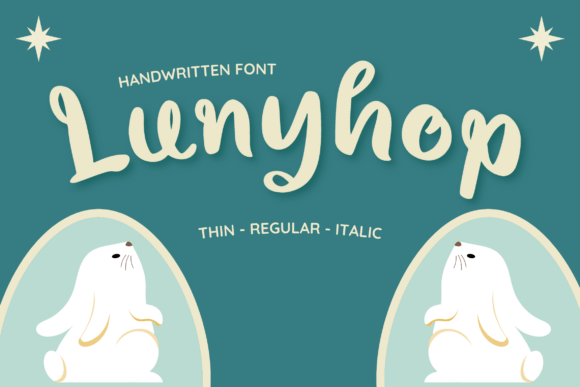
When you first encounter Lunyhop, you’re greeted by a sense of joyful spontaneity. This isn’t a rigid, corporate typeface; it’s a handwritten font that captures the warm, slightly imperfect charm of a child’s marker pen. Its bouncy baseline gives text a lively rhythm, while smooth, rounded terminals soften every character, making it feel approachable and friendly. Lunyhop is designed to evoke innocence and energy, making it a standout choice for projects where warmth and whimsy are paramount. Unlike many script fonts that can be overly formal or cursive, Lunyhop maintains excellent legibility at various sizes, a crucial feature for both print and digital applications.
The font’s personality is built on its visual characteristics. The letters have a consistent, gentle bounce that avoids feeling chaotic. This controlled movement ensures that while the font feels organic and human-made, it doesn’t compromise on readability for longer passages. Its design mimics the natural flow of handwriting, giving every piece of text—from a book title to a social media quote—a uniquely personal and engaging appeal. For designers, this means you can inject personality into a layout without sacrificing clarity.
Where Lunyhop Truly Shines: From Storybooks to Social Media
Understanding where a creative font like Lunyhop works best is key to using it effectively. Its core strength lies in applications targeting children, families, and any context that benefits from a playful, upbeat tone. Think beyond just kids’ materials; it’s a versatile tool for any brand or project aiming for a friendly, approachable identity.
- Publishing & Editorial Design: Lunyhop is a natural fit for children’s book titles, chapter headings, and educational worksheets. Its clear, friendly letterforms make learning materials more engaging for young readers. It also works wonderfully for cookbook titles aimed at family audiences or hobbyist magazines.
- Branding & Packaging: For toy packaging, nursery décor, baby product labels, or even pet food branding, Lunyhop communicates fun and care. It’s an excellent choice for logo design for small businesses like daycare centers, toy shops, or bakeries that want a handmade, trustworthy feel.
- Marketing & Digital Content: The font is ideal for Easter campaigns, spring-themed promotions, and social media graphics. Its inherent energy makes it perfect for Instagram quotes, Facebook ads for family events, or website banners for seasonal sales. It helps create social media content that feels authentic and attention-grabbing.
- Personal & Craft Projects: Crafters and hobbyists will find Lunyhop invaluable for scrapbooking titles, birthday invitation cards, baby shower announcements, and DIY nursery wall art. Its availability in multiple styles (Light, Regular, Italic) provides the flexibility needed for intricate design projects.
When evaluating a project for Lunyhop, consider the audience and the message. If the goal is to convey sophistication, luxury, or serious authority, a different typeface like a serif or a clean sans-serif might be more appropriate. However, if the project needs to feel welcoming, energetic, and human, Lunyhop is a strong contender.
Practical Guidance for Designers and Creators
Integrating a new premium font into your workflow requires more than just liking its look. Here’s how to approach Lunyhop from a practical standpoint to ensure it enhances your project’s professionalism and effectiveness.
Evaluate the Fit: Before committing, test Lunyhop with your actual content. Place it in a mockup of your intended application—whether it’s a book cover, a website header, or a product label. Does it maintain the intended mood? Does it work at the required sizes? For body text, it’s generally best used for short bursts like pull quotes or subheadings, as its handwritten nature can cause fatigue in long paragraphs. Use it for headlines and key phrases where its personality can make the biggest impact.
Master Font Pairing: A handwritten font like Lunyhop rarely works well in isolation for professional projects. Pairing it with a more neutral, highly readable font creates visual hierarchy and balance. For example, use Lunyhop for the main headline and pair it with a clean sans serif font for body copy. Alternatively, combine it with a simple serif font for a touch of classic elegance in editorial layouts. The key is contrast: let Lunyhop provide the personality while its partner font ensures readability for denser information.
Leverage the Styles: Lunyhop includes Light, Regular, and Italic styles. Use this to your advantage. The Light weight can be used for secondary text or to create a more delicate feel, while the Italic style adds a dynamic slant perfect for emphasizing words or creating a sense of motion. This typographic flexibility allows you to create sophisticated visual hierarchy within your designs using a single font family.
Consider Readability and Licensing: Always test the font at the final size and in the final medium (print vs. screen). Ensure the letter spacing and line height are optimized for clarity. Furthermore, as a commercial font, verify that Lunyhop’s license covers your intended use, especially for merchandise, large-scale distribution, or web embedding. Proper licensing is a non-negotiable part of professional design assets management.
Ultimately, Lunyhop is more than just a collection of letters. It’s a design asset that can infuse projects with genuine warmth and playful energy. By thoughtfully applying its characteristics to the right contexts and pairing it wisely, you can create brand identity materials, marketing campaigns, and personal projects that connect with audiences on a human level, standing out in a sea of generic typography.