Orchid: The Handwritten Display Font with a Sweet, Friendly Touch
There are moments in design when you need more than just a typeface. You need a voice. You need a font that carries personality, warmth, and an immediate sense of approachability. This is where Orchid enters the conversation. It's a premium font that doesn't just sit on the page; it communicates. As a handwritten display font, Orchid is built to be the fun, friendly, and slightly whimsical element in your creative toolkit. It’s the digital equivalent of a warm smile or a playful nudge, designed for projects that need to feel personal and engaging right from the first glance.
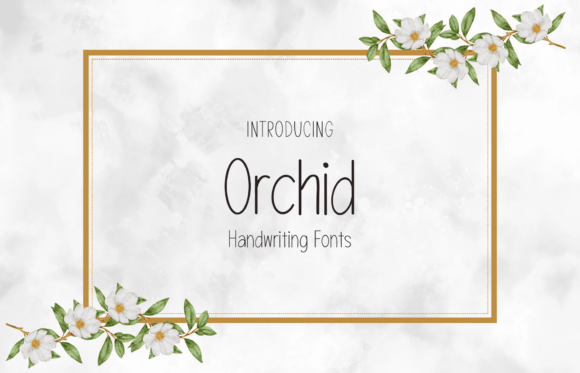
Visually, Orchid is characterized by its smooth, flowing curves and a consistent, gentle baseline. It avoids the chaotic, overly scratchy look of some script fonts, opting instead for a legible, sweet aesthetic. The letterforms have a natural, organic feel, as if drawn by a skilled hand with a steady brush or marker. This isn't a font for legal documents or dense body text. Its strength lies in headlines, logos, and short bursts of impactful text. The overall personality is cute and fun, making it an ideal choice for designs targeting a younger audience, or any project that benefits from a lighthearted, creative touch. It's a creative font that feels both modern and timeless in its simplicity.
Where Orchid Truly Blooms: Practical Applications
Understanding a font's best use cases is crucial for effective design. Orchid excels in scenarios where brand perception needs to lean towards friendliness, creativity, and approachability. Think beyond the obvious. While it's perfect for a child's birthday invitation or a wedding invitation, its utility extends into professional spheres that value personality.
- Branding & Identity: For small businesses, boutiques, bakeries, or creative studios, Orchid can form the cornerstone of a brand identity. It works beautifully for logos, product names on packaging design, and brand marks. Imagine it on a artisanal jam jar label or the header of a craft brewery's website. It instantly signals a handcrafted, quality product.
- Digital & Web Presence: In web design and social media graphics, Orchid can be used for impactful hero section headlines, call-to-action buttons, or profile bios. It grabs attention without being aggressive. For content creators and bloggers, it's a fantastic choice for YouTube thumbnails, podcast artwork, or Instagram story text overlays, adding a personal signature to digital content.
- Publishing & Editorial: Editorial design often relies on strong typographic hierarchy. Orchid can serve as the display font for magazine section headers, article titles in a lifestyle publication, or chapter openers in a young adult novel. It pairs surprisingly well with a clean serif font or a neutral sans serif font for body copy, creating a dynamic and readable contrast.
- Marketing & Promotional Material: Flyers, posters, and movie titles for family-friendly films are natural habitats. For marketers, it's a tool to create social media graphics that feel authentic and less corporate. It’s the font you choose for a "Weekend Sale!" banner or a "Thank You" card included in an e-commerce order.
Don't overlook its potential in education. As noted, it's ideal for use in school. Teachers can use it for engaging classroom materials, worksheets, and award certificates. Students can employ it for creative projects, presentations, and digital design coursework where a personal touch is valued over rigid formality.
Making Orchid Work for You: A Designer's Practical Guide
Choosing a font like Orchid is just the first step. Using it effectively requires a bit of strategy. Here’s how to integrate it into your workflow for maximum impact.
Evaluating Project Fit and Readability
Before you commit, ask: does my project's tone match Orchid's personality? If you're designing a corporate financial report, look elsewhere. If you're creating a menu for a cozy café, a logo for a yoga studio, or graphics for a love shirt, you're on the right track. Always test readability at the size it will be used. As a display font, Orchid is meant for larger sizes. Use it for headlines and short phrases. For longer sentences or small print, pair it with a highly legible sans serif font or serif font to maintain clarity and establish a proper visual hierarchy.
The Art of Font Pairing
Orchid has a strong personality, so its companion fonts should complement, not compete. A classic pairing strategy is to combine a expressive handwritten font like Orchid with a neutral, geometric sans serif font (think Montserrat, Lato, or Open Sans). This contrast ensures the display text pops while the body text remains easy to read. For a more elegant, editorial look, pair it with a refined serif font like Playfair Display or Lora. The key is balance. Let Orchid be the star of the show in headlines, and let its supporting cast handle the detailed information.
Licensing and Styles
When you invest in a premium font, you're often paying for quality, extensive character sets, and proper licensing. Ensure the license of your Orchid font covers your intended use—whether it's for a personal blog, a commercial product for sale, or a client's logo design. Check what styles are included. Does it come with a bold weight for extra emphasis? Does it have alternate characters or ligatures that can add uniqueness to your typography? Understanding these design assets allows you to use the font to its full potential, ensuring consistency and professionalism across all your applications.
Ultimately, Orchid is more than just a collection of glyphs. It's a tool for storytelling. It injects humanity, warmth, and a sense of craft into digital and print spaces. By understanding its strengths and applying it thoughtfully, you can leverage this modern typography choice to connect with your audience on a more personal level, making your designs not just seen, but felt.