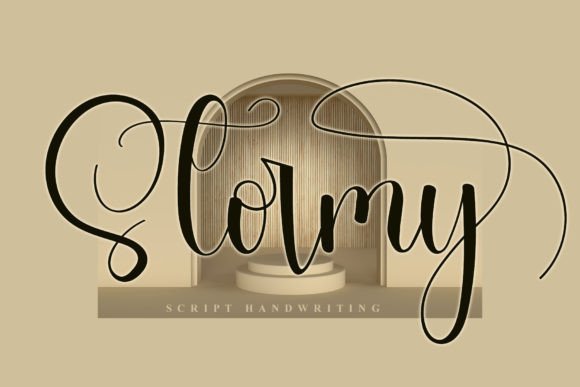
Stormy: The Bold Display Font for Dynamic Projects
Understanding the Stormy Typeface
When a project needs to communicate raw energy, you reach for a tool that matches that intensity. Stormy is not a background player; it is a premium font designed to take center stage. As a display font, its primary job is to grab attention immediately, making it an essential asset for headlines, titles, and logos. Unlike a subtle sans serif font meant for body text or a flowing script font for elegant invitations, Stormy brings a robust, heavy presence to the canvas. It feels grounded, powerful, and unapologetically bold.
The visual personality of Stormy is rooted in strength. The letterforms often feature thick strokes and sharp angles, creating a sense of motion even when standing still. This is what we call a creative font with high impact. It does not whisper; it shouts. The character design balances weight with clarity, ensuring that while the letters are heavy, they do not become muddy. For designers working in modern typography, Stormy offers a fresh take on the block-style display face, providing enough unique quirks in its curves and terminals to avoid looking generic.
Where Stormy Shines: Applications and Context
Finding the right context for a typeface is just as important as the font itself. Stormy excels in environments where excitement and action are the core themes. It is a natural fit for sports design, where the lettering needs to match the athleticism of the players. Think of jersey numbers, league branding, or stadium signage. The font’s robust structure ensures it remains legible from a distance, a critical requirement for poster design and outdoor advertising.
Beyond the athletic field, Stormy has a cinematic quality that works well for movie posters, film credits, and documentary title cards. It conveys drama and significance. For entrepreneurs and small business owners, particularly those in the fitness, automotive, or tech sectors, using Stormy in a logo design can project an image of stability and dominance. It tells your audience that your brand is established and confident.
Here is a practical breakdown of ideal use cases for this typeface:
- Apparel and Merchandise: Perfect for t-shirt designs, hoodies, and caps where the text needs to be a graphic element itself.
- Publishing: Excellent for book cover designs, especially in genres like thrillers, action, or science fiction.
- Digital Media: Use it for social media graphics where you have less than a second to stop the scroll. It works incredibly well for YouTube thumbnails or Instagram stories.
- Gaming: The aesthetic fits perfectly with game interfaces, loading screens, and branding for esports teams.
Strategic Implementation: Pairing and Hierarchy
Using a bold font like Stormy requires a strategic approach to visual hierarchy. Because it is so dominant, it should almost exclusively be used for headlines or short bursts of text. If you try to write a paragraph using Stormy, you will likely create a "wall of text" that is difficult to read. The goal is to let Stormy introduce the topic with a punch, then hand the baton to a more readable typeface for the details.
This is where font pairing becomes critical. To create a balanced layout, pair Stormy with a clean, neutral sans serif font. A geometric sans serif with lighter weights creates a pleasing contrast, allowing the bold headers to pop without overwhelming the reader. For example, if you are designing a website, use Stormy for the H1 and H2 tags to establish the brand identity, but switch to a standard sans serif for navigation and body copy. This contrast improves readability and guides the user’s eye naturally down the page.
When evaluating if Stormy is the right fit for your project, consider the emotional tone. Does your brand need to feel approachable and soft? If so, a handwritten font or a rounded sans serif might be better. However, if you want to convey power, speed, or authority, Stormy is the correct choice. It adds a layer of professionalism that generic fonts often lack.
Licensing and Technical Considerations
Before integrating any design asset into a commercial project, understanding the license is non-negotiable. As a commercial font, Stormy typically requires a license for use in products you intend to sell or for client work. Always verify whether the license covers the specific usage you need, such as packaging design, web design (via @font-face), or print-on-demand merchandise.
Look closely at the file package. A robust premium font often includes multiple styles—such as an Italic, Condensed, or Outline version. These variations give you flexibility. For instance, using the italic version can add a sense of speed to a racing poster, while an outline version can create interesting layered effects in poster art.
Ultimately, Stormy is more than just letters on a screen; it is a design asset that sets a mood. By using it intentionally and pairing it wisely, you can elevate a standard layout into something memorable and impactful. Whether you are a blogger crafting a header image or a marketer designing a campaign banner, this typeface provides the heavy lifting your project needs to stand out.